
Facsinating Melody

fr18jun20

They say that if you lose one of your senses, your others increase in acuity to compensate: you become better at hearing if you lose your sight, for instance. It has seemed to me that as remote rehearsing strips out our capacity to operate harmonically, our awareness and appreciation of melody has blossomed to fill the aesthetic gap.

To be fair, I was always a sucker for a good tune, and had I been able to go and work with Fascinating Rhythm in person on Thursday, we probably would have spent a lot of our time thinking about melody anyway, given the character of the music we were dealing with . But I was particularly glad that the song they had asked me to arrange for them last autumn* that we explored together is so profoundly melodic, as it gives them the opportunity to reach much of what the heart of the music is about, even while they are stuck in their Zoom rooms.

Directors Connecting

dirday2020Saturday 13 June was supposed to have been the day when directors of LABBS choruses convened from around the country in Coventry for our annual training event. Instead, we met online. On the bright side, it meant that costs for both individuals and organisation were negligible, and notwithstanding all the drawbacks of the medium, it was wonderful to get everyone together. It is wonderfully supportive community.

Inevitably, the shape of the event had to change. Instead of a whole day, we shortened it to an afternoon in recognition of the obstacles to focus and engagement on Zoom. And the practical training model I was so looking forward to sharing, involving small groups working on the intimate connection between gesture and sound, will necessarily have to wait until we can get into a room together once again to make that connection.

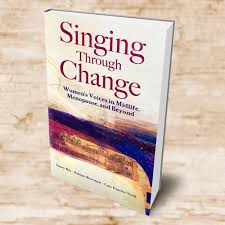
Book Review: Singing Through Change

singingthroughchangeTl;dr: this is a useful book, and you should read it.

Singing Through Change: Women’s Voices in Midlife, Menopause, and Beyond is, as you would imagine, relevant to the vast majority of people involved in singing. If you are a man who never makes music with adult women it may not touch on your activities very much (though you may well have female friends and relatives who would be happy for the men in their life to have some insight into their experiences), but for everyone else there will be direct relevance either for yourself, for the women you make music with, or both.

On the Power of Boo

In the wake of events in the US over the past week or two, I have seen friends making comments along the lines of: I hate that this is happening and I feel helpless because I don’t see what I can do to help. In the spirit of Justin Trudeau’s point that the best response is to put our own house in order, I’d like to share with my barbershop friends a point made by the inimitable Elizabeth Davies.

Those of you who have been following the #donewithdixe debates will know her landmark blog post articulating the reasons why a genre with barbershop’s history of appropriation and exclusion needs to leave a significant chunk of its C20th repertoire in the past if it is to aspire to be the kind of inclusive community it claims to be.

Principles for Creative Work, aka Things Not to Worry About

This post started out as a framework to guide a group with whom I’m starting a new creative adventure. (Yes, you will hear about it in due course, but we actually have to produce some stuff first.) Sharing it for all my other friends and colleagues who might find it useful.

  • You will have more ideas than you can use. This means you will have to throw a lot of them away. Don’t worry about this apparent ‘waste’. Discarded ideas don’t go into landfill, they become the compost that makes your creative soil more fertile.
  • You will start more projects than you finish, especially in the earlier stages of your creative adventure. This doesn’t mean you lack staying power, it is a normal part of the process. See above re composting.

Singing, Safety, and Double Glazing

This is possibly not the metaphor you were expecting, but bear with me, I have found it a useful one for thinking about our current choral predicament.

If you’ve seen windows being fitted, you’ll know that the frames are installed first, and then the double-glazed units are inserted, and wedged into place with a strip of rubber seal all round the edge. If you’ve ever had problems with your double glazing, you may have learned that the seal will keep most of the rain out, but is unlikely to (and indeed not intended to) keep it all out. Instead, the frames are designed to drain the water that gets in back outside. (If the installers drill the holes out on the wrong side, they drain into your house instead of outside; DAMHIK.)

Likewise, whilst the installers will squeeze mastic all round the join between frames and wall, this is also not intended to be the primary means to keep the water out. The structure should be designed so that rain doesn’t get in, and the mastic serves as draught-proofing and to repel any minor seepage.

Soapbox: Allocating Parts for Emotional Damage

soapboxIn SATB music, it’s relatively easy figure out which part people should sing if they don’t already know. The texture is built around a divide by sex, with a split between higher and lower voices in each. So you just see what kind of range someone has, and slot them in where the notes they have and the notes the music needs coincide. Some people (counter-tenors, female tenors) defy the first part, but the stratification by range still works, so the model as a whole presents safe a generalisation of how to go about things.

One of the defining characteristics of barbershop music is that the parts are all much less differentiated by range (there’s a clue in the description ‘close-harmony’). Thus, most people can readily sing at least two of the parts, usually three, sometimes all four. You’d think this would take some of the pressure off the decision-making process of part-allocation, but in fact it seems more often to intensify the reliance on social stereotyping in identifying parts.

Three-Part Textures and Complete Chords

I have been working with a couple of composers and arrangers recently who have been working in textures with three vocal lines, accompanied by a piano (in one case with several other instruments too, but with the piano at the heart of the band). A question that has cropped up with all of them is to what extent you need the vocal parts to present a complete harmonic texture if the piano is there to fill in the chords for you.

Of course, you can’t actually get complete chords in a three-voice texture unless you only use triads, but you can still make the differences between something that sounds like it is giving you enough harmonic information and something that sounds empty. All this is in the context of the harmonic conventions of western tonality as used in 20th-century popular song traditions; other conventions are available of course, but this was the world to which these particular musicians had made their stylistic commitments.

The generalisations we came up with about how this texture works best are as follows:

...found this helpful?

I provide this content free of charge, because I like to be helpful. If you have found it useful, you may wish to make a donation to the causes I support to say thank you.


Archive by date

Syndicate content